
C and Z Purlins: Cost, Specifications, and Quotation Guide for Industrial Construction | Supreme PEB Indore
C and Z purlins are essential components of modern steel construction, providing support for roofing and wall cladding systems in factories, warehouses, industrial sheds, and Pre-Engineered Buildings (PEB). Choosing the right purlin profile, thickness, steel grade, and coating is important for structural performance, material efficiency, and project budgeting.
Supreme PEB, based in Indore, Madhya Pradesh, provides steel building solutions for industrial and commercial construction projects. For businesses looking for C purlins and Z purlins in Indore, Indore, Pithampur, Bhopal, Ujjain, and other industrial regions of Central India, understanding product specifications, cost factors, and quotation requirements can help simplify procurement decisions.
1. What Documents Are Required to Order C and Z Purlins for a PEB Project?
Before ordering C and Z purlins, businesses should share the technical details needed to select the correct section and quantity. The documentation required depends on whether the purlins are being purchased for a new building, an existing structure, or a replacement project.
Essential Documents and Information
1. Building Layout and Dimensions
Provide the building length, width, roof configuration, eave height, and relevant structural drawings. These details help establish the proposed purlin arrangement.
2. Structural Drawings and Design Calculations
For a new PEB project, approved or preliminary structural drawings help identify purlin spacing, support conditions, spans, and loading requirements. Final section selection should be based on appropriate structural engineering.
3. Purlin Profile and Dimensions
Specify whether C purlins or Z purlins are required, along with the section dimensions, lip dimensions, depth, and other relevant profile details.
4. Thickness and Steel Grade
Confirm the required base-metal thickness and steel grade. These specifications affect the purlin's structural capacity, weight, and price.
5. Coating and Corrosion Protection
Specify whether galvanized or another suitable protective coating is required. The coating specification should match the intended environment and applicable project requirements.
6. Loading and Site Information
Provide information about roof sheeting, insulation, suspended services, wind loads, and other applicable loads. Site conditions and design criteria can affect the required purlin section.
7. Quantity and Delivery Requirements
Share the estimated quantity, required lengths, delivery location, and expected delivery schedule to support accurate costing and production planning.
8. Commercial Requirements
Confirm the required material documentation, inspection requirements, payment terms, taxes, and transportation arrangements.
For industrial projects in Indore, Pithampur, Bhopal, and across Madhya Pradesh, these details can help suppliers prepare a more accurate C and Z purlin quotation.
2. How Do PEB Companies Calculate the Cost of C and Z Purlins?
The cost of C and Z purlins depends on material specifications, section dimensions, thickness, steel grade, coating, quantity, and delivery requirements. Since different purlin sections have different weights per metre, comparing prices without matching specifications can lead to inaccurate purchasing decisions.
Key Factors That Affect C and Z Purlin Prices
1. Purlin Profile and Section Size
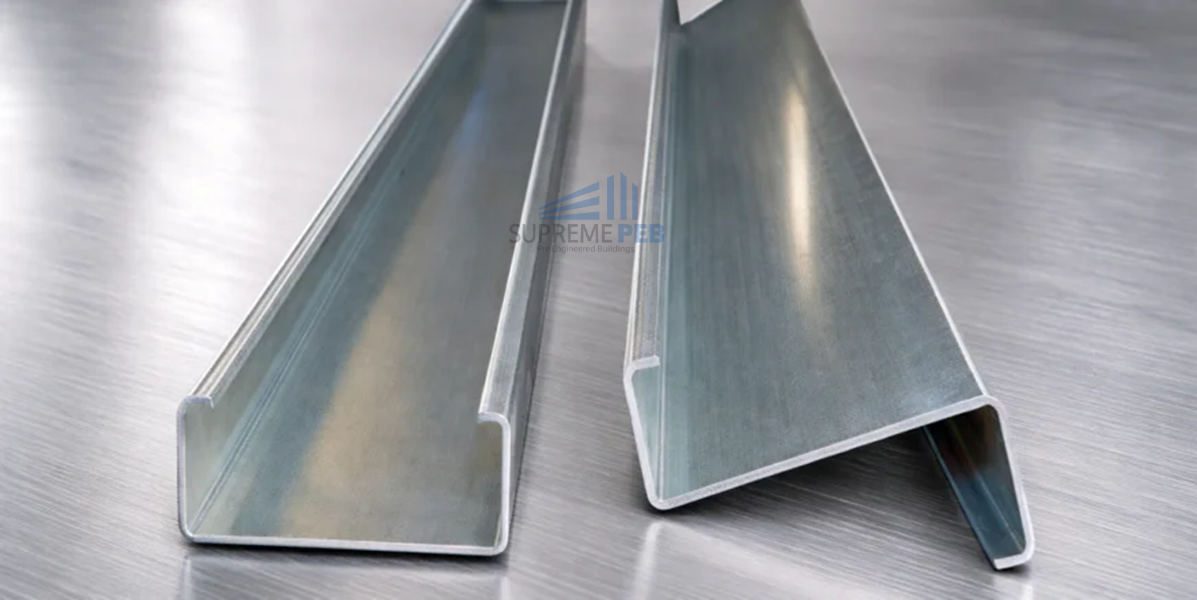
C purlins and Z purlins have different cross-sectional shapes. The selected section depends on the structural arrangement, span, loading, and connection requirements.
2. Base-Metal Thickness
Thickness is an important cost factor because it affects the quantity of steel used and the section's structural properties. Always verify the actual base-metal thickness rather than relying solely on nominal product descriptions.
3. Steel Grade
The specified steel grade and mechanical properties influence structural design and material selection.
4. Coating Specifications
Galvanized or other protective coatings can affect material cost and suitability for different environments.
5. Purlin Weight per Metre
Purlin weight depends on section geometry, thickness, and material density. It is useful for calculating the approximate material quantity and comparing quotations when the specifications match.
6. Required Lengths and Order Quantity
The total quantity, standard or customized lengths, cutting requirements, and production planning can influence the final price.
7. Transportation and Delivery
Freight charges depend on the delivery distance, shipment size, unloading arrangements, and site accessibility.
8. Additional Fabrication Requirements
Special holes, notches, cutting, connection details, or other customized requirements may affect the quotation.
How Is the Purlin Cost Estimated?
A supplier generally follows these steps:
Confirm the required C or Z section and its dimensions.
Verify the thickness, steel grade, and coating specification.
Determine the required lengths and total quantity.
Calculate the approximate material weight using the applicable section weight.
Apply the quoted price basis, such as per kilogram, per metre, or per piece.
Add applicable fabrication, transportation, taxes, and other charges.
Prepare the quotation with the specifications and delivery terms clearly stated.
For example, if purlins are priced per kilogram, the estimated material value can be calculated using the total estimated weight multiplied by the quoted rate per kilogram. The final amount may also include processing, freight, taxes, and other applicable charges.
Important: The cheapest C or Z purlin is not necessarily the best choice. The section must meet the structural design requirements, and the price comparison should use equivalent dimensions, thicknesses, steel grades, and coating specifications.
3. What Should Be Included in a C and Z Purlin Quotation?
A professional quotation should clearly identify the supplied product and its technical and commercial conditions. Before placing an order, check the following details.
1. Product Description
The quotation should specify C purlins or Z purlins and identify their intended application, such as roof support or wall cladding support.
2. Section Dimensions
Confirm the section depth, flange dimensions, lip dimensions, and other applicable profile measurements.
3. Base-Metal Thickness
Ensure the quoted thickness is clearly stated and matches the project specification.
4. Steel Grade and Coating
Check the specified steel grade, mechanical properties, coating type, and coating requirements.
5. Length and Quantity
Confirm the required length of each section, number of pieces, total quantity, and any cutting requirements.
6. Unit Weight and Pricing Basis
Verify the applicable unit weight and whether the price is calculated per kilogram, metre, or piece. Confirm how weight variations, if any, will be handled commercially.
7. Manufacturing and Quality Documentation
Clarify applicable material test certificates, inspection records, dimensional checks, and batch traceability requirements.
8. Transportation and Delivery
Check the delivery location, freight charges, unloading responsibilities, and expected dispatch schedule.
9. Taxes and Payment Terms
Review the base price, applicable GST, payment milestones, quotation validity, and other commercial conditions.
10. Warranty and Exclusions
Confirm any applicable product warranty and identify exclusions, including installation, structural design, or other work that is not part of the supply order.
C and Z Purlin Quotation Comparison Checklist
| Item | What to verify |
|---|---|
| Purlin type | C section or Z section |
| Section dimensions | Depth, flange, and lip dimensions |
| Thickness | Specified base-metal thickness |
| Steel grade | Required material properties |
| Coating | Type and coating specification |
| Quantity | Length, number of pieces, and total weight |
| Price basis | Per kg, metre, or piece |
| Documentation | Applicable material certificates |
| Delivery | Freight, unloading, and dispatch schedule |
| Commercial terms | Taxes, payment terms, and quotation validity |
Using this checklist helps buyers compare C and Z purlin suppliers fairly and reduce the risk of specification differences or unexpected charges.
Why Choose Supreme PEB for C and Z Purlin Requirements in Indore?
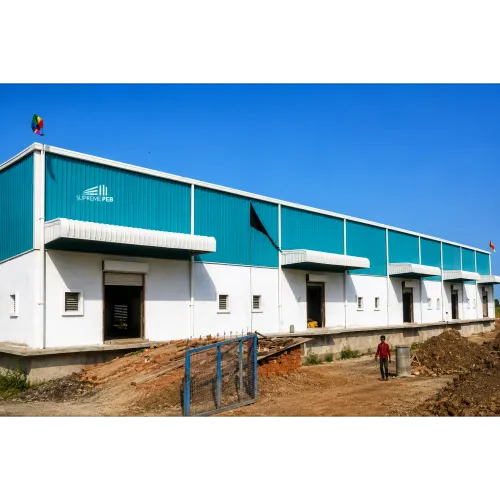
Supreme PEB is an Indore-based PEB brand serving industrial and commercial construction requirements in Madhya Pradesh and surrounding regions. Businesses planning new factories, warehouses, and industrial sheds can explore steel building solutions and related component requirements.
C and Z purlins are commonly used for:
Supporting roofing sheets in industrial sheds
Supporting wall cladding systems
Steel-framed factories and warehouses
PEB structures and manufacturing facilities
Industrial workshops and commercial buildings
Suitable building extensions and renovation projects
When sourcing C and Z purlins, the correct specification should be determined by the building's structural design, loading conditions, span, support arrangement, and environmental exposure.
Whether you are planning an industrial shed in Pithampur, a warehouse in Indore, or a manufacturing facility in Bhopal, Supreme PEB can help you discuss your steel building and component requirements.
Frequently Asked Questions (FAQs)
Q1. What is the difference between C purlins and Z purlins?
C purlins have a C-shaped cross-section, while Z purlins have a Z-shaped cross-section. Their suitability depends on the structural arrangement, support conditions, span, and engineering design.
Q2. What information is required to order C and Z purlins?
Typically, suppliers need the profile type, dimensions, thickness, steel grade, coating specification, lengths, quantity, delivery location, and applicable drawings or design requirements.
Q3. How is the price of C and Z purlins calculated?
Pricing may be based on weight, length, or individual pieces. The final cost depends on section dimensions, thickness, steel grade, coating, quantity, fabrication, transportation, and applicable taxes.
Q4. Are C and Z purlins suitable for industrial sheds in Indore?
Yes. Properly designed C and Z purlins can be used in industrial sheds, factories, warehouses, and PEB structures in Indore, subject to the building design and site conditions.
Q5. Which purlin thickness should I choose?
The required thickness depends on the structural design, span, loading, section dimensions, steel grade, and applicable design standards. A qualified structural engineer should determine the appropriate specification.
Q6. What should I check before approving a purlin quotation?
Verify section dimensions, base-metal thickness, steel grade, coating, lengths, quantity, unit weight, price basis, delivery charges, taxes, documentation, and payment terms.
Q7. Where can I find C and Z purlins in Indore, Madhya Pradesh?
Businesses can contact Supreme PEB in Indore to discuss C and Z purlin requirements for industrial sheds, factories, warehouses, and other suitable steel building projects.
Plan Your Steel Building Project with Supreme PEB
C and Z purlins are important components of steel roofing and cladding systems. Choosing the correct profile, thickness, material specification, and coating can help support structural performance, efficient material procurement, and long-term building requirements.
Planning an industrial shed, factory, or warehouse in Indore? Contact Supreme PEB to discuss your C and Z purlin specifications, project requirements, and steel building solutions.
Supreme PEB – Modern Steel Building Solutions for India's Growing Industries.
Keywords
C purlin in Indore, Z purlin in Indore, C and Z purlin supplier in Madhya Pradesh, C purlin price per kg, Z purlin price, galvanized C purlins, steel Z purlins, PEB purlin manufacturer, industrial shed purlins, roofing support purlins, warehouse steel components, C and Z purlins in Pithampur, steel building components in Central India.