Thank you for writing to us. One of our executive will reach back to you through your submitted medium. In case there’s an urgency, feel free to connect over WhatsApp for faster response.
Prefer calling? Dial +9108048890641 (International callers) or 08048890641 (Indian callers).
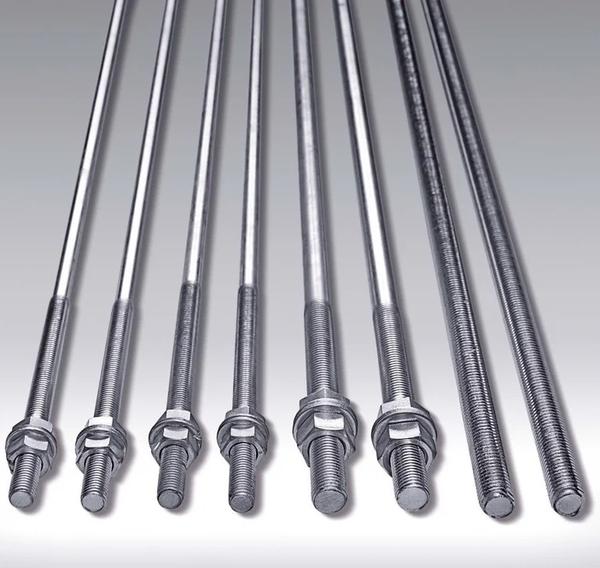
A sag rod, also known as a tension rod or tie rod, is a structural component used to provide support and stability to various structures, particularly in situations where there is a need to counteract the forces of gravity or tension. Sag rods are commonly used in construction, engineering, and utility applications to prevent excessive sagging, swaying, or buckling of structures under their own weight or external loads. The primary purpose of a sag rod is to maintain the integrity and stability of structures, especially in situations where traditional compression members may not be sufficient. They are used in applications where structures need additional support to resist gravitational or tensile forces.
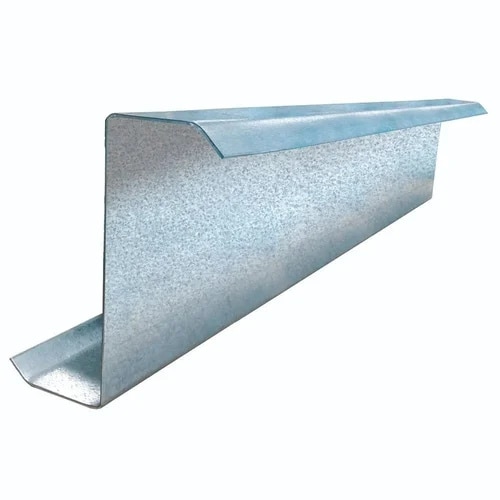
PRO Z Purlins are high-strength, lightweight steel members used as structural supports in roofing and wall cladding systems. Their unique Z-shape allows for easy nesting, longer continuous spans, efficient load distribution, and quick installation, making them ideal for industrial, commercial, residential, and agricultural buildings. They are durable, corrosion-resistant, and require minimal maintenance.
Advantages
Longer Spans: Z-shape allows for continuous nesting, covering longer distances without additional support.
Lightweight & Strong: High strength-to-weight ratio reduces structural load while providing excellent support.
Easy Installation: Designed for quick fixing and nesting, saving time and labor.
Efficient Load Transfer: Distributes roof and wall loads effectively across rafters.
Versatile: Suitable for industrial, commercial, agricultural, and residential buildings.
Durable & Low Maintenance: Galvanized or coated surface resists corrosion and requires minimal upkeep.
Installation
Position Z purlins on rafters, align and level, nest for continuous spans, fix securely with bolts or screws, add bracing, and check stability.
Application of PRO Z Purlins:
PRO Z Purlins are primarily used as structural members in steel construction for roofing and wall cladding. They are ideal for:
Long-span industrial and commercial buildings
Warehouses and factories
Residential steel structures
Agricultural buildings (barns, sheds, storage units)
Their Z-shape allows easy nesting, continuous spans, and efficient load transfer, making them perfect for modern steel framing systems.
Pro C Purlins
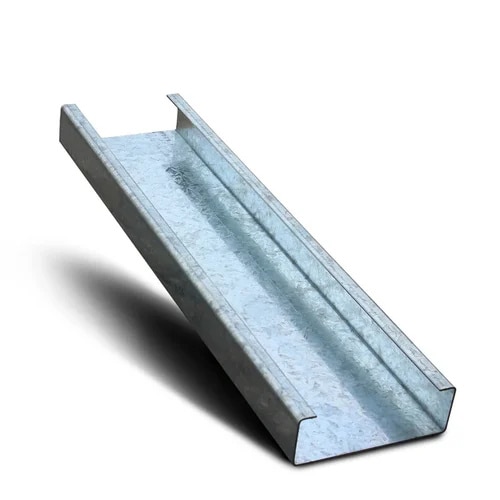
Pro C purlins have a shape resembling the letter “C” when viewed in cross-section. They are typically used in roofing systems and are installed horizontally along the length of the roof, parallel to the primary structural beams or rafters. The flat section of the C purlin provides a stable surface for attaching the roof cladding or sheeting, while the lips on the edges help in providing rigidity and support.
Advantages
Lightweight & Strong – High strength-to-weight ratio.
Easy Installation – Pre-punched holes, quick assembly.
Cost-Effective – Saves material, transport, and labor costs.
Corrosion Resistant – Galvanized/coated for long life.
Customizable – Available in various sizes and lengths.
Uniform Quality – Precision roll-formed for consistency.
Eco-Friendly – 100% recyclable steel.
Good Load Capacity – Excellent for roofs and wall supports.
Installation
Position purlins on rafters as per layout, align and level, then fix securely with bolts or screws. Overlap joints (10–15% span) where needed and install bracing for stability. Check alignment, tightness, and safety before roofing.
Application of PRO C Purlins:
PRO C Purlins are widely used as structural support members in steel buildings. They provide the framework for roofing and wall cladding in:
Industrial sheds and warehouses
Commercial buildings
Residential steel structures
Factories and workshops
Agricultural buildings (barns, storage)
They are ideal for long spans, easy installation, and high load-bearing efficiency.